Extended Quantum Computing Patterns
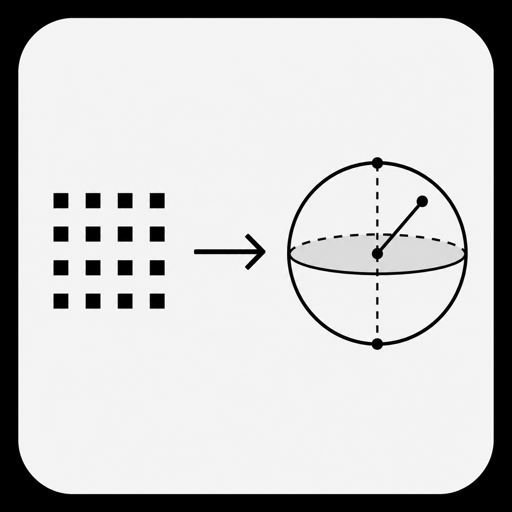
Intent
Map classical data to a quantum state so that it can be processed by a quantum algorithm.
Context
A quantum algorithm, especially a quantum machine learning algorithm, must process data that is initially available in a classical representation.
Forces
Encoding methods differ in the number of qubits they require, their circuit depth, the information they preserve, and the cost of preparing the state.
Solution
Choose an encoding method that maps the input data to amplitudes, rotation angles, computational-basis states, or a feature map. The choice should reflect the data, the available hardware, and the needs of the algorithm.
Result
The classical input is represented as a quantum state that can be used by later quantum operations.
Examples
Amplitude encoding, angle encoding, basis encoding, matrix encoding, feature maps, and quantum memory encodings.
Related Patterns
Initialization; Quantum Neural Network (QNN)
Known Uses
PennyLane embedding templates and Qiskit feature-map and state-preparation components.