Extended Quantum Computing Patterns
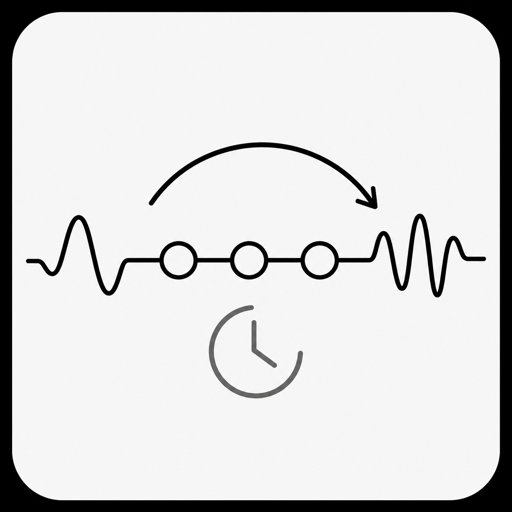
Intent
Simulate the time evolution of a quantum system governed by a Hamiltonian.
Context
An algorithm must approximate the action of the time-evolution operator exp(-iHt) for a Hamiltonian H and an evolution time t.
Forces
Approximation error, circuit depth, the structure of the Hamiltonian, and the available qubits affect the choice of simulation method.
Solution
Decompose the Hamiltonian and approximate its evolution using a method such as a Trotter-Suzuki product formula, a linear combination of unitaries, or qubitization.
Result
The circuit approximates the evolution of the input state under the selected Hamiltonian for the requested time.
Examples
First- and higher-order Trotter formulas, time-evolution templates, qubitization, and LCU-based simulation.
Related Patterns
Linear Combination of Unitaries; Variational Quantum Eigensolver (VQE); Quantum Phase Estimation (QPE)
Known Uses
Time-evolution and Trotterization components in PennyLane, Qiskit Algorithms, and Classiq.